Mastering Cybersecurity for staying Safe Online

The concepts of confidentiality, integrity, and availability are the foundation of cybersecurity, which has become essential to our digital age in order to protect our online actions and data. The goal of mastering cybersecurity is to assist students in recognizing dangers to their online safety, such as viruses, cyberattacks, and identity theft, and in implementing cybersecurity best practices to safeguard their online presence at home or at work. In order to improve cybersecurity and prevent cybercrime, important subjects covered include the threat landscape, authentication, networking, SIEM, antivirus, machine learning for cybersecurity, cloud security, and risk management frameworks.

Threat Landscape : 

The cyber threat landscape is rapidly evolving, with malicious actors constantly adapting their tactics to exploit new vulnerabilities and capitalize on current events. Here’s a list of typical cyberthreats:

  • Cyberterrorism : An assault on computers and information technology with the intention of causing harm and causing widespread disruption in society, is a threat motivated by politics.
  • Malware : This type of threat includes viruses, worms, spyware, and ransomware. It can corrupt the system, obstruct access to your computer’s resources, install malicious software, or secretly transfer data from your data storage.
  • Botnets : This particularly repulsive attack uses remotely controlled malware-infected machines to launch massive strikes. Imagine it as a network of computers controlled by a single, well-organized cybercriminal. Even worse, infected PCs are added to the botnet network.
  • Adware : is a type of malware that poses danger. It’s commonly referred to as software that runs advertisements. Unwanted internet adverts are automatically generated by the adware virus, which is a potentially unwanted program (PUP) that was installed without your consent.
  • SQL injection : uses Structured Query Language to introduce malicious code into a server that uses SQL.
  • Phishing : is the practice of hackers deceiving a target into opening a fraudulent email and following instructions that usually request personal information.
  • Man-in-the-middle (MITM) attacks: These types of attacks entail cybercriminals interfering with a two-person internet transaction. The hackers may sift and take wanted info once they’re inside. Unsecured public Wi-Fi networks are a common target for MITM attacks.
  • Denial of Service (DoS): attacks are cyberattacks that overload a computer or network by flooding it with excessive “handshake” activities. This prevents the system from responding to user requests.

Risk Management : 

We need to evaluate our attack surface and implement defensive strategies like multifactor authentication, frequent patching, antivirus software, and attack surface management tools in order to reduce these risks. Assessing and being up-to-date with different cyberthreats, such as malware, phishing, man-in-the-middle, DDoS, and SQL injection, is also crucial.

The NIST Chance Administration System (NIST RMF), ISO/IEC 27001:2013, and the NIST Network Safety System (NIST CSF) are a few key frameworks and standards for online protection risk assessment. IT risk necessitates a number of basic skills, including risk assessment, examination, single information storage, monitoring tools, flexible detailing, and executive systems gambling.

The best practices for network safety risk management for executives include assessing your IT environment and resources, identifying your strengths for a risk assessment, integrating risk assessments into culture and values, maintaining strict security measures, and maintaining consistent and dependable perceivability.

Cybersecurity Framework : 

Network safety systems give organized rules and best practices to assist associations with upgrading their security stance and meet administrative consistency prerequisites. A few broadly embraced structures incorporate the NIST Network protection System (CSF), ISO 27001 and ISO 27002 Principles, SOC2, NRC-CIP, HIPAA, GDPR, FISMA, CIS Basic Security Controls, COBIT, CSA Cloud Controls Lattice, HTRUST CSF, Katakri, PCI DSS, Secure Controls Structure, CMMC 2.0, Fundamental 8, and Digital Fundamentals.

In outline, network protection has become a fundamental piece of our day-to-day existence, and becoming capable in it calls for sharpness, adaptability, and a devotion to long-lasting learning. People and associations might reinforce their advanced guards and unhesitatingly explore the internet based world by complying with these rules.
Increasing Productivity with Knowledge Management

At Harmony Technology, we are aware of how important knowledge management is to boosting productivity, organizational effectiveness, and client satisfaction. We improve overall experience and return on investment, expedite procedures, and raise customer happiness by proactively arranging and coordinating our aggregate knowledge assets.

Our extensive knowledge management program makes use of a number of technologies and platforms, such as chatbots, internal social networking sites, cross-departmental training, document coordination tools, and educational tutorials. We use an organized process to find, gather, organize, analyze, disseminate, and produce knowledge, enabling our teams to innovate, work together, and make knowledgeable choices.

Understanding Knowledge Management :

Leading supplier of knowledge management systems, Harmony Technology focuses on integrating internal and external knowledge to promote organizational performance and efficiency. Information and skills are the two main components of knowledge management. Information management is the process of organizing, storing, and sharing information among teams utilizing state-of-the-art tools and systems, such as collaborative platforms for knowledge sharing, centralized knowledge repositories, and sophisticated search and retrieval capabilities. Investing in extensive training programs, such as cross-departmental seminars, mentoring programs, and chances for ongoing learning through online courses and certifications, is necessary to support employees’ skill development and information transfer.

Key Components of Knowledge Management :

CRM systems and knowledge management infrastructure are the core elements of knowledge management; The creation of a program that our stakeholders follow will lead to Strategy Alignment. And one of the most important aspects of Content Management is producing material that is easy for consumers and end users to utilize. Then we’ve got Technology Enablement (by evaluating our current technological capabilities), followed by the Process Integration, and the Governance and Metrics (that define key metrics to assess the success of our knowledge management implementation), and finally Cultural Transformation (by promoting a knowledge-sharing mindset) those are just a few of the ways that stakeholders engagement can be used to ensure alignment and buy-in.

By ensuring that Harmony Technology’s knowledge management strategy is exhaustive, thoughtful, and aligned with its business objectives, these components increase productivity and foster success.

Benefits of Knowledge Management :

Furthermore, knowledge management plays a pivotal role in:

1.Operational Efficiency:

  • Sharing best practices and learned lessons saves time and money.
  • Reducing the time required for recently hired employees to become competent.
  • Slashing operational costs through process simplification.

2.Customer Satisfaction:

  •  Understanding the requirements and desires of the customer.
  •  Enabling faster responses and improvements to goods and services.
  • Shortening the time needed to manufacture goods, services, or proposals in order to expedite client delivery.

3.Organizational Agility:

  • Giving managers up-to-date, relevant information to help them make better decisions.
  • Promoting advancement and personal growth via the sharing of specialist information.
  • Encouraging collaboration and the sharing of ideas in order to promote creativity and cultural development.

4.Competitive Advantage:

  • Preserving critical information from being lost when employees quit the organization.
  • Providing firms with a competitive edge by means of effective information transfer and preservation.
  • Improving business practices, products, services, and strategies.

Implementing a Knowledge Management System :

The installation of a strong knowledge management system requires careful planning and implementation. Harmony Technology implements a methodical strategy to guarantee an efficacious launch. A comprehensive plan that incorporates end users and contributors at every stage is crucial. Examining the benefits, drawbacks, and costs of various knowledge management systems as well as potential new technologies is crucial. To keep momentum and support going, gaps between the intended and present states should be noted, money and leadership support should be verified, and a roadmap with quick victories should be set.

The execution guide incorporates a significant level of information, the executives interaction that incorporates best practices for information creation, ID, grouping, catch, approval, transfer, maintenance, chronicling, estimation, and reporting. Each step of the cycle ought to include end clients and contributors, who will likewise be engaged with assessing possible new and existing innovations, gauging the pros and cons of various information the executives arrangements, and distinguishing holes between the ideal and real states through a thorough assessment that thinks about individuals, processes, innovation, design, and culture.

Harmony Technology creates a balanced scorecard to evaluate value, performance, quality, and compliance in order to put the plan into action and attain modest victories along the way.

We employ cutting-edge technology like chatbots and virtual agents as part of our continuous system development efforts to enhance the self service.

Through adherence to this methodical procedure, Harmony Technology guarantees that the execution of its management system is in line with its business goals, incorporates stakeholders across all tiers, and fosters an environment of transparency and ongoing enhancement.


Harmony Technology and Maritimex Form Strategic Global Partnership

Rabat, Morocco – 5th April 2024 


Harmony Technology, a leading Moroccan provider of knowledge management and data processing services, is pleased to announce a strategic partnership with Maritemex, a joint venture by Templar Executives in Morocco. This collaboration marks a significant step forward in strengthening cybersecurity initiatives on both a national and global scale. 

Harmony Technology is renowned for its innovative programs designed to meet the specific needs of businesses, corporations, and various industries. As a leading supplier and integrator of Internet of Things (IoT) programs and Radio Frequency Identification (RFID) solutions, Harmony Technology has been at the forefront of digitalization across numerous sectors. The company’s recent establishment of a dedicated Cyber Business Unit and this partnership with Maritemex further solidify their commitment to advancing cyber resilience based on industry best practices. 

Maritemex brings a wealth of experience in delivering robust cybersecurity services and solutions to a diverse range of industries. They collaborate extensively with governments, businesses, and academic institutions. The Maritemex Templar Cyber Academy offers a comprehensive portfolio of training and education programs, including courses accredited by the UK’s National Cyber Security Centre (NCSC). Maritemex is also spearheading the development of the ‘Cyber Centre of Excellence for Africa,’ reflecting Morocco’s position as a leader in African cybersecurity and underpinning its status as the most connected country on the continent, boasting an internet penetration rate exceeding 88% and continuing to grow. 

Under the leadership of King Mohammed VI, Morocco is actively pursuing its digital agenda. The Moroccan government recognizes the critical importance of cybersecurity in this endeavor and has implemented a series of key initiatives to strengthen the country’s cyber posture and safeguard its ‘Digital Sovereignty.’ These initiatives include the establishment of the General Directorate of Information Systems Security (DGSSI) as the national cybersecurity authority, a focus on human resource development and upskilling programs, and efforts to bolster the resilience of information systems, particularly those pertaining to critical national infrastructure. Additionally, Morocco fosters international and regional cooperation to facilitate collaboration and knowledge sharing in the ever-evolving cybersecurity landscape. 

Mohammed BOUZOUI, CEO of Harmony Technology, stated: “Our collaboration with Maritemex represents a significant milestone in our mission to enhance cyber resilience in Morocco and beyond. By combining our expertise and resources, we are well-positioned to address the complexities of the cybersecurity landscape and deliver impactful solutions to our clients.” 

We are thrilled to partner with Harmony Technology and embark on this exciting journey together,” said Andrew Fitzmaurice, co-President of Maritemex. Morocco is unwavering in its commitment to safeguarding its Digital Sovereignty and has made significant progress in bolstering its cybersecurity capabilities. Through this strategic partnership, Maritemex and Harmony Technology aim to leverage our combined expertise to support this national agenda, as well as initiatives across the region and internationally.” 

For more information, please email [email protected]  

About Harmony Technology 

Harmony Technology is a Moroccan company specializing in knowledge management and data processing services. Harmony Technology develops innovative programs and intelligent tools to empower their clients in achieving their objectives. Backed by a dedicated team of experts, Harmony Technology fosters enduring partnerships with their clients, ensuring their confidence and success in their projects. 

About Maritemex 

Maritemex is an international cybersecurity company enabling governments and businesses by delivering a full spectrum of Cyber services and solutions. This includes the Maritemex Cyber Academy which promotes and develops cyber skills and learning to support individuals, businesses and governments in an increasingly digital and interconnected world. 

Harmony Supporting the Future of E-Government in Morocco

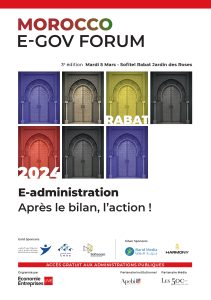
Harmony is proud to be a silver sponsor of the upcoming forum, “E-GOVERNMENT: AFTER THE REVIEW, ACTION!” This important event, taking place on March 5th, 2024, at the Sofitel Rabat Jardin des Roses Hotel, brings together key stakeholders to discuss the future of e-government in Morocco. 

Despite recognizing the potential of digital solutions, Morocco faces challenges in implementing effective e-administration. This forum aims to address these challenges by: 

  • Analyzing current progress and identifying areas for improvement in e-government. 
  • Learning from successful models like Estonia, where e-services are widely adopted. 
  • Developing a roadmap for the implementation of a robust and efficient e-government platform in Morocco. 

Harmony is committed to fostering innovation and efficiency in the public sector. We believe e-government can enhance transparency, accessibility, and service delivery for all citizens. 

Join us at this pivotal forum as we collectively work towards a brighter future for e-government in Morocco. We will keep you updated with more feedback from the panelists.