
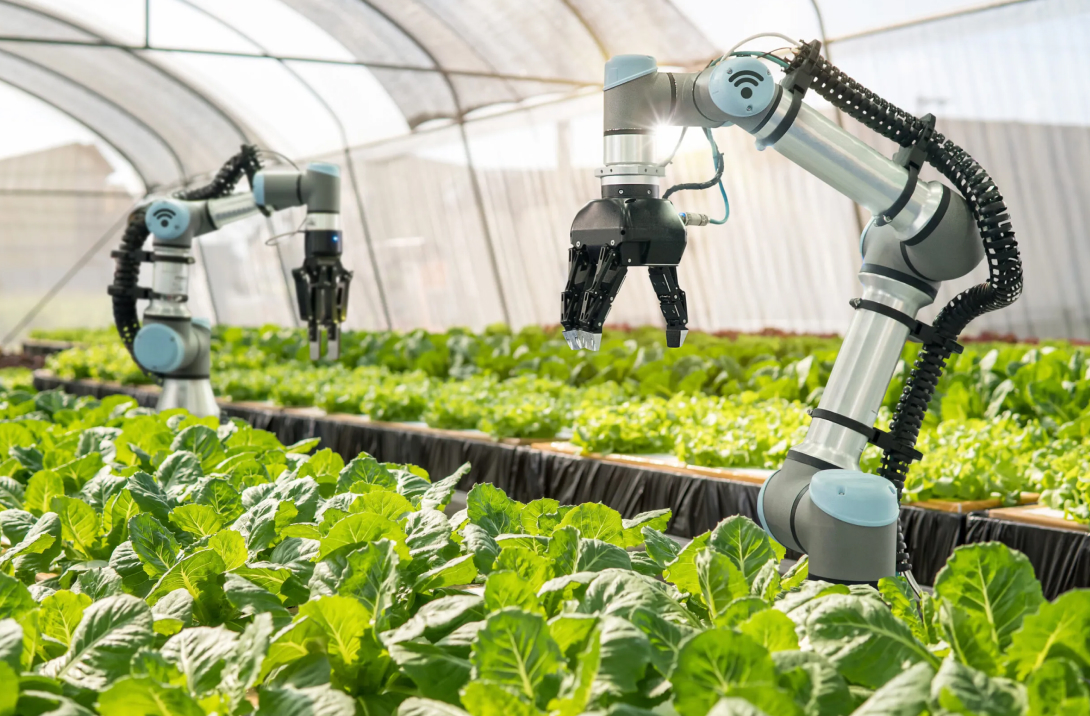
Agriculture plays a vital role globally, being the backbone of economies in both developed and developing countries. It is the backbone of the economy, which is the important income source of the rural communities and employs millions of workers. Artificial intelligence applies machine vision to identify possible soil deficiencies, understand the soil defects, and detect plant pests and diseases. Agricultural robots automate harvesting and replaces most labor-intensive farming.
The goal of precision farming is profitability, efficiency, and sustainability. It is summarized using the phrase, “Right Place, Right Time, Right Product.” Precision farming is used to create seasonal forecasting models to predict weather patterns and improve food production.
The agriculture and agri-food industry are fundamental to global food security, sustainability, and economic growth. Harmony is at the forefront of revolutionizing this sector with cutting-edge solutions and sustainable practices that address the industry’s most pressing challenges.
Precision Agriculture
Harmony’s precision agriculture techniques employ advanced technologies such as sensors, drones, and data analytics to monitor and manage crops more effectively. These tools provide farmers with real-time insights into crop health, soil conditions, and weather patterns, enabling them to make informed decisions that optimize resource use and boost yields. Precision agriculture not only enhances productivity but also minimizes the environmental footprint by ensuring that inputs like water, fertilizers, and pesticides are used efficiently.
Sustainable Practices
Sustainability is a cornerstone of Harmony’s philosophy. The company promotes farming practices that reduce environmental impact and enhance soil health. By implementing strategies that focus on waste reduction, water conservation, and biodiversity enhancement, Harmony helps farmers adopt long-term sustainable practices. These methods not only ensure the resilience of farming systems but also contribute to the overall health of ecosystems, promoting a balance between agricultural production and environmental stewardship.
Supply Chain Optimization
In the agri-food industry, a streamlined supply chain is essential for ensuring that products reach consumers efficiently and safely. Harmony’s expertise in logistics, traceability, and quality control helps optimize the supply chain from farm to table. By enhancing the traceability of products, Harmony ensures that every step of the supply chain is monitored and managed effectively, reducing losses and maintaining high standards of quality. This comprehensive approach ensures that consumers receive fresh, safe, and high-quality products while farmers and producers benefit from increased efficiency and profitability.
Smart Farming Technologies
Harmony integrates smart farming technologies to transform traditional farming practices. The use of IoT devices and AI-driven analytics provides farmers with data-driven insights that improve decision-making processes. These technologies enable precise monitoring and management of agricultural activities, from soil moisture levels to crop growth stages.
By leveraging these smart solutions, farmers can increase productivity, reduce costs, and improve overall farm management. Harmony’s smart farming technologies represent a significant advancement in the agricultural sector, driving innovation and enhancing the sustainability of farming operations.
Harmony’s comprehensive approach to the agriculture and agri-food industry combines advanced technology with sustainable practices to create a resilient and efficient agricultural system.
By focusing on precision agriculture, sustainable practices, supply chain optimization, and smart farming technologies, Harmony addresses the critical challenges faced by the industry today. Our commitment to innovation and sustainability not only benefits farmers and businesses but also contributes to a more sustainable future for global food production.